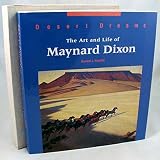

A Place of Refuge: Maynard Dixon’s Arizona

Product Description
Condition - Very Good
The item shows wear from consistent use but remains in good condition. It may arrive with damaged packaging or be repackaged.
A Place of Refuge: Maynard Dixon’s Arizona
- Used Book in Good Condition
As early as 1903 Dixon referred to Arizona as home. Although he spent most of his life in San Francisco, Dixon lamented to friends that he longed for Arizona and the solitude of the desert, and he frequently traversed the land’s varied expanses. In 1939 he made Tucson his winter home and spent his remaining years painting his beloved desert landscape. In the confluence of Arizona’s natural and cultural landscapes, Dixon would become one of the West’s most distinctive painters, creating a body of work that established his place among the vanguard of artists who portrayed western subjects.
Thomas Brent Smith explores Dixon’s remarkable departure from traditional depictions of human conflict in the “Old West†rendered by such predecessors as Frederic Remington, Charles M. Russell, and Charles Schreyvogel. Smith’s essay describes this shift in artistic ideology and analyzes the tranquil images that emerged on Dixon’s canvases. Donald J. Hagerty’s biographical essay highlights Dixon’s travels and his affinity for the people and landscape of Arizona.