
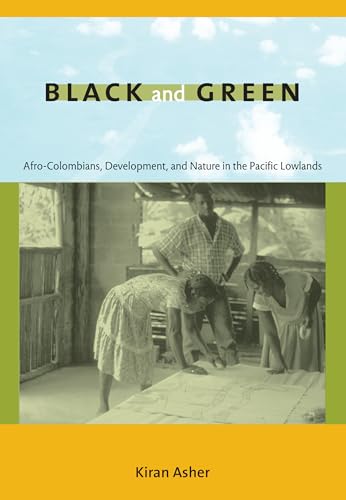
Black and Green: Afro-Colombians, Development, and Nature in the Pacific Lowlands
Product Description
Condition - Very Good
The item shows wear from consistent use but remains in good condition. It may arrive with damaged packaging or be repackaged.
Black and Green: Afro-Colombians, Development, and Nature in the Pacific Lowlands
The Pacific region had yet to be overrun by drug traffickers, guerrillas, and paramilitary forces in the early 1990s. It was better known as the largest area of black culture in the country (90 percent of the region’s population is Afro-Colombian) and as a supplier of natural resources, including timber, gold, platinum, and silver. Colombia’s Law 70, passed in 1993, promised ethnic and cultural rights, collective land ownership, and socioeconomic development to Afro-Colombian communities. At the same time that various constituencies sought to interpret and implement Law 70, the state was moving ahead with large-scale development initiatives intended to modernize the economically backward coastal lowlands. Meanwhile national and international conservation organizations were attempting to protect the region’s rich biodiversity. Asher explores this juxtaposition of black rights, economic development, and conservation—and the tensions it catalyzed. She analyzes the meanings attached to “culture,†“nature,†and “development†by the Colombian state and Afro-Colombian social movements, including women’s groups. In so doing, she shows that the appropriation of development and conservation discourses by the social movements had a paradoxical effect. It legitimized the presence of state, development, and conservation agencies in the Pacific region even as it influenced those agencies’ visions and plans.
Technical Specifications
You might also like
Between the Guerrillas and the State: The Cocalero Movement, Citizenship, and Identity in the Colombian Amazon
Intercultural Utopias: Public Intellectuals, Cultural Experimentation, and Ethnic Pluralism in Colombia (Latin America Otherwise)

Counting the Dead: The Culture and Politics of Human Rights Activism in Colombia (California Series in Public Anthropology)

Blood and Capital: The Paramilitarization of Colombia (Ohio RIS Latin America Series)

Violence in Colombia, 1990-2000: Waging War and Negotiating Peace (Latin American Silhouettes)

A Century of Violence in a Red City: Popular Struggle, Counterinsurgency, and Human Rights in Colombia

Revolutionary Social Change in Colombia: The Origin and Direction of the FARC-EP

A Small Place

Colombia: Fragmented Land, Divided Society (Latin American Histories)

The Fate of the Forest: Developers, Destroyers, and Defenders of the Amazon, Updated Edition