
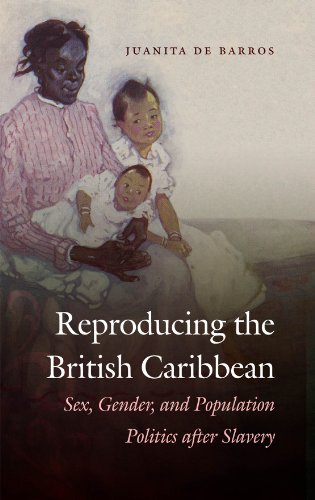
Reproducing the British Caribbean: Sex, Gender, and Population Politics after Slavery

Product Description
Condition - Very Good
The item shows wear from consistent use but remains in good condition. It may arrive with damaged packaging or be repackaged.
Reproducing the British Caribbean: Sex, Gender, and Population Politics after Slavery
This innovative book traces the history of ideas and policymaking concerning population growth and infant and maternal welfare in Caribbean colonies wrestling with the aftermath of slavery. Focusing on Jamaica, Guyana, and Barbados from the nineteenth century through the 1930s, when violent labor protests swept the region, Juanita De Barros takes a comparative approach in analyzing the struggles among former slaves and masters attempting to determine the course of their societies after emancipation.
Invested in the success of the "great experiment" of slave emancipation, colonial officials developed new social welfare and health policies. Concerns about the health and size of ex-slave populations were expressed throughout the colonial world during this period. In the Caribbean, an emergent black middle class, rapidly increasing immigration, and new attitudes toward medicine and society were crucial factors. While hemispheric and diasporic trends influenced the new policies, De Barros shows that local physicians, philanthropists, midwives, and the impoverished mothers who were the targets of this official concern helped shape and implement efforts to ensure the health and reproduction of Caribbean populations in the decades before independence.
Technical Specifications
You might also like
Imposing Decency: The Politics of Sexuality and Race in Puerto Rico, 1870-1920 (American encounters/global interactions)
The Company They Kept: Migrants and the Politics of Gender in Caribbean Costa Rica, 1870-1960

The Revolution Is for the Children: The Politics of Childhood in Havana and Miami, 1959-1962 (Envisioning Cuba)

Flaming Souls: Homosexuality, Homophobia, and Social Change in Barbados
Caliban and the Yankees: Trinidad and the United States Occupation