
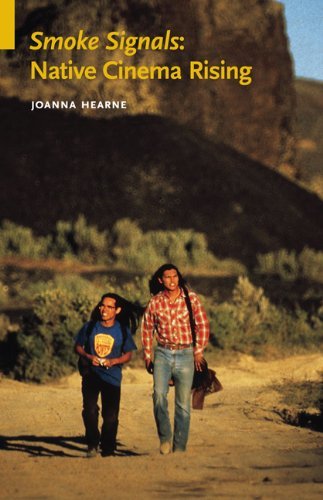
Smoke Signals: Native Cinema Rising (Indigenous Films)
Product ID: B009RM39Z0
Condition: USED (All books in used condition)
No Stock / Cannot Import
Product Description
Condition - Very Good
The item shows wear from consistent use but remains in good condition. It may arrive with damaged packaging or be repackaged.
Smoke Signals: Native Cinema Rising (Indigenous Films)
Smoke Signals is a historical milestone in Native American filmmaking. Released in 1998 and based on a short-story collection by Sherman Alexie, it was the first wide-release feature film written, directed, coproduced, and acted by Native Americans. The most popular Native American film of all time, Smoke Signals is also an innovative work of cinematic storytelling that demands sustained critical attention in its own right. Embedded in Smoke Signals’s universal story of familial loss and renewal are uniquely Indigenous perspectives about political sovereignty, Hollywood’s long history of misrepresentation, and the rise of Indigenous cinema across the twentieth and twenty-first centuries. Joanna Hearne’s work foregrounds the voices of the filmmakers and performers—in interviews with Alexie and director Chris Eyre, among others—to explore the film’s audiovisual and narrative strategies for speaking to multiple audiences. In particular, Hearne examines the filmmakers’ appropriation of mainstream American popular culture forms to tell a Native story. Focusing in turn on the production and reception of the film and issues of performance, authenticity, social justice, and environmental history within the film’s text and context, this in-depth introduction and analysis expands our understanding and deepens our enjoyment of a Native cinema landmark.
Â
Â
Technical Specifications
Country
USA
Author
Joanna Hearne
Binding
Kindle Edition
EISBN
9780803244627
Format
Kindle eBook
Label
University of Nebraska Press
Manufacturer
University of Nebraska Press
NumberOfPages
280
PublicationDate
2012-12-01
Publisher
University of Nebraska Press
ReleaseDate
2012-12-01
Studio
University of Nebraska Press

